99%
of users feel secure using Pleo
of users feel secure using Pleo
hours saved by admins every year thanks to Pleo
of users are satisfied or very satisfied with Pleo
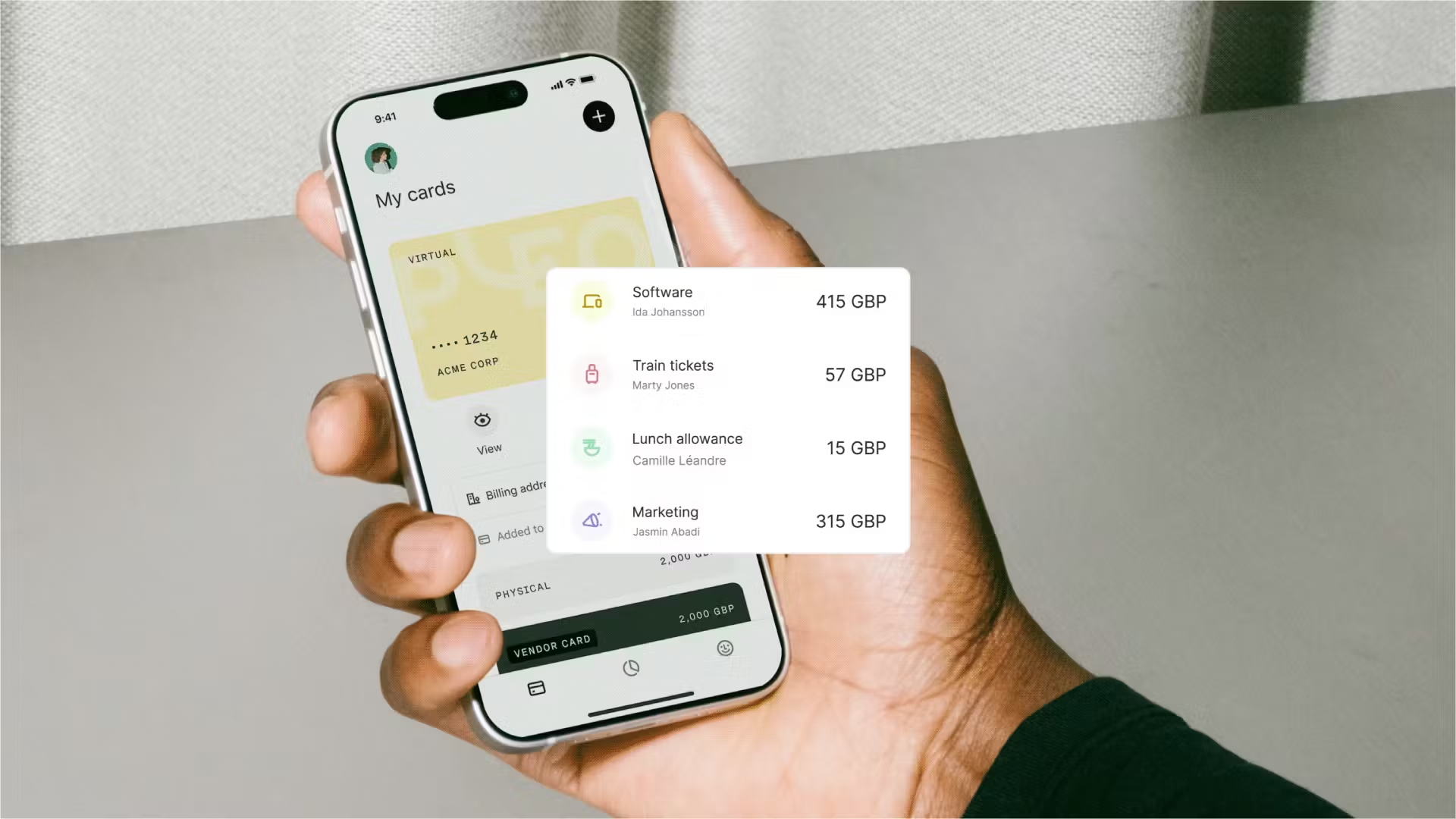
Pleo helps companies escape spreadsheet-era expenses: smart company cards, snap‑and‑go receipt capture, and real‑time visibility instead of end‑of‑month chaos. 99% of users feel secure using Pleo, admins save around 90 hours a year, and more than 133m in spend flows through a product that feels simple, modern, and under control.
Joining Pleo meant designing for two things at once: the product customers touch every day and the design organisation that shapes it. Together with product, engineering, research, and our People partners, the goal was to make design a true business lever – from how we onboard customers to how designers grow their careers.
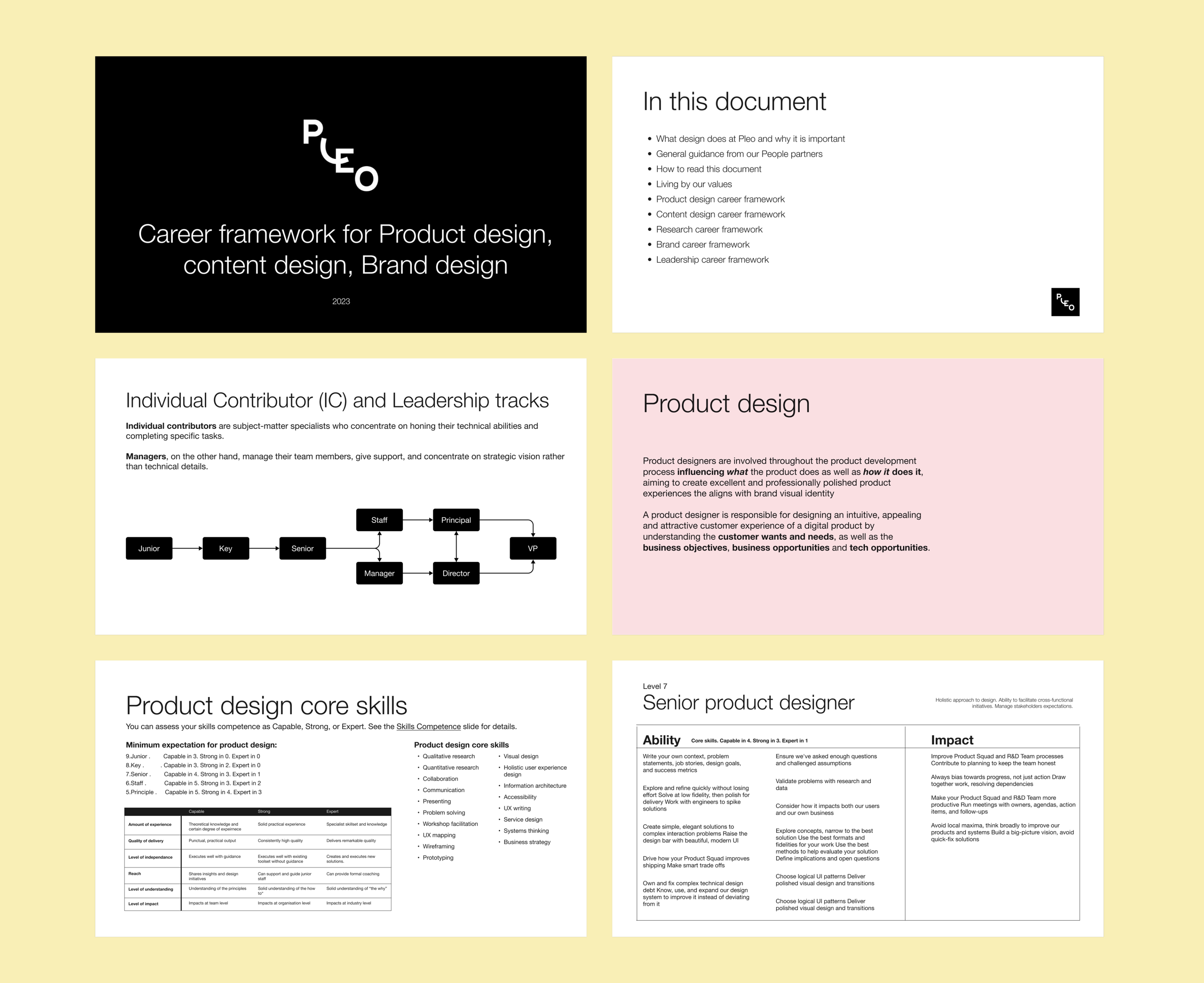
To do that, we built a clear product design career framework that maps progression from junior to principal and leadership, anchored in real skills rather than vague titles. Designers know what “great” looks like in research, systems thinking, visual craft, and collaboration, and squads know what to expect from their design partners at each level. That clarity lifts the quality of work and makes hiring, coaching, and feedback faster and fairer.
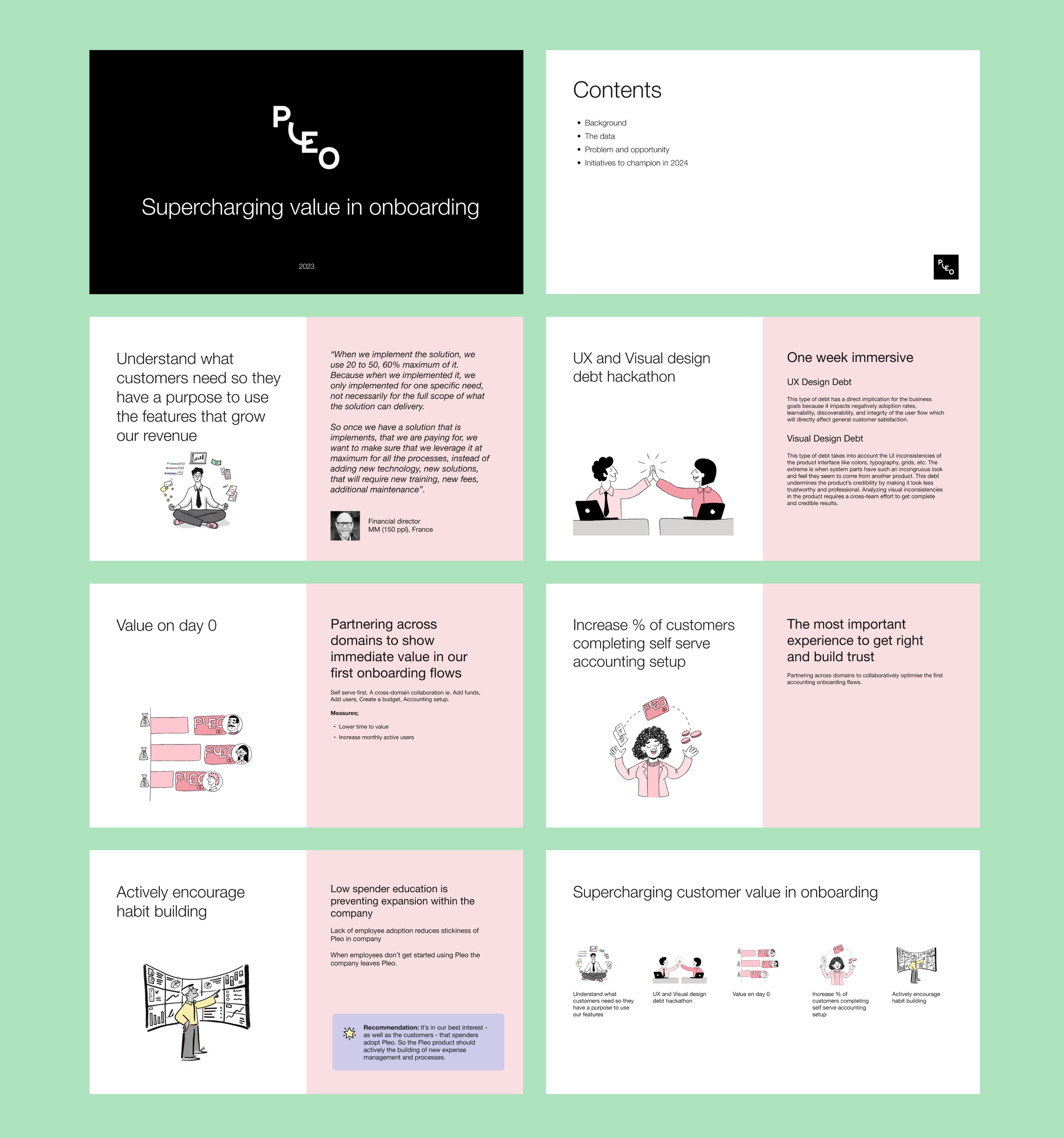
On the product side, onboarding and early value were the big levers. Too many tools get implemented and then only 20–60% of their potential is used. At Pleo, I worked across domains on a “value from day zero” push, focusing on four self‑serve journeys that really matter: adding funds, inviting users, creating budgets, and connecting accounting. The aim was simple – get teams to their first “aha” moments quickly, and measure it with time‑to‑value, active usage, and self‑serve setup completion.
As the product and team scaled, UX and visual design debt started to sneak in: small inconsistencies in flows, components, and visuals that made the experience feel just a little less sharp and a little harder to learn. We ran a UX and visual design debt hackathon with stakeholders from across R&D to surface the worst offenders, quantify the impact on adoption and trust, and line up a roadmap of pragmatic fixes. That work not only tightened the UI, it also gave us a shared language for when “polish” is actually business‑critical.
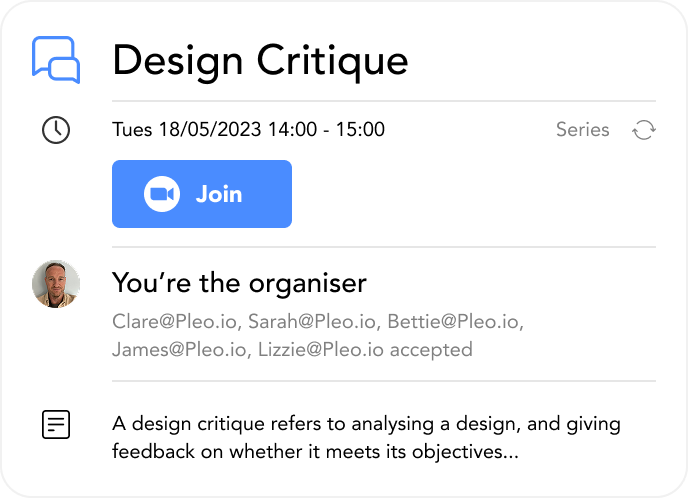
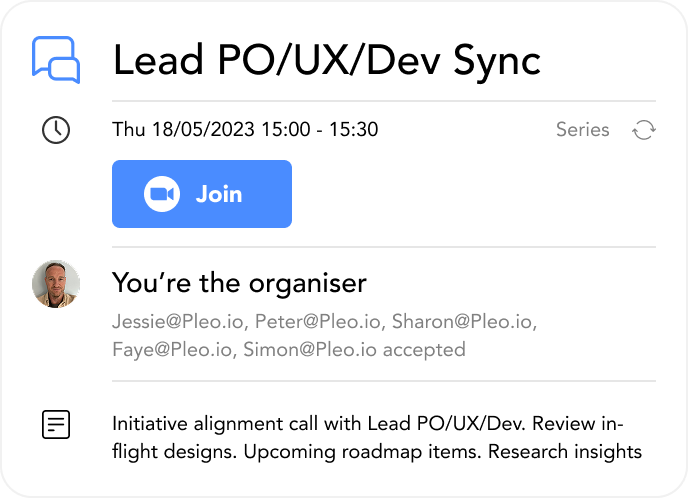
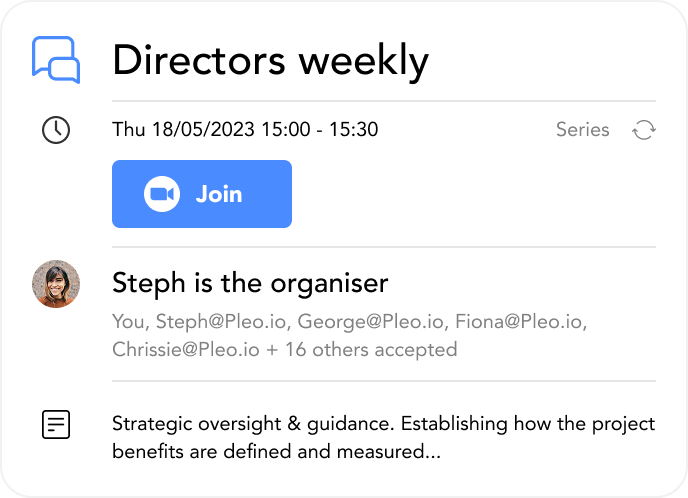
Finally, we tightened the feedback loops around all of this.
“Dave has a natural ability bring positive energy into the room and inspire and galvanize people around him.”
Robert Fransgard
Head of design at Pleo
Need a confident design leader who can guide teams, influence execs, and jump into Figma? I’m your guy, let’s talk.
Email me
View my LinkedIn
of users feel secure using Pleo
hours saved by admins every year thanks to Pleo
of users are satisfied or very satisfied with Pleo
Pleo helps companies escape spreadsheet-era expenses: smart company cards, snap‑and‑go receipt capture, and real‑time visibility instead of end‑of‑month chaos. 99% of users feel secure using Pleo, admins save around 90 hours a year, and more than 133m in spend flows through a product that feels simple, modern, and under control.
Joining Pleo meant designing for two things at once: the product customers touch every day and the design organisation that shapes it. Together with product, engineering, research, and our People partners, the goal was to make design a true business lever – from how we onboard customers to how designers grow their careers.
To do that, we built a clear product design career framework that maps progression from junior to principal and leadership, anchored in real skills rather than vague titles. Designers know what “great” looks like in research, systems thinking, visual craft, and collaboration, and squads know what to expect from their design partners at each level. That clarity lifts the quality of work and makes hiring, coaching, and feedback faster and fairer.
On the product side, onboarding and early value were the big levers. Too many tools get implemented and then only 20–60% of their potential is used. At Pleo, I worked across domains on a “value from day zero” push, focusing on four self‑serve journeys that really matter: adding funds, inviting users, creating budgets, and connecting accounting. The aim was simple – get teams to their first “aha” moments quickly, and measure it with time‑to‑value, active usage, and self‑serve setup completion.
As the product and team scaled, UX and visual design debt started to sneak in: small inconsistencies in flows, components, and visuals that made the experience feel just a little less sharp and a little harder to learn. We ran a UX and visual design debt hackathon with stakeholders from across R&D to surface the worst offenders, quantify the impact on adoption and trust, and line up a roadmap of pragmatic fixes. That work not only tightened the UI, it also gave us a shared language for when “polish” is actually business‑critical.
Finally, we tightened the feedback loops around all of this.
“Dave has a natural ability bring positive energy into the room and inspire and galvanize people around him.”
Robert Fransgard
Head of design at Pleo
Need a confident design leader who can guide teams, influence execs, and jump into Figma? I’m your guy, let’s talk.
Email me
View my LinkedIn
of users feel secure using Pleo
hours saved by admins every year thanks to Pleo
of users are satisfied or very satisfied with Pleo
Pleo helps companies escape spreadsheet-era expenses: smart company cards, snap‑and‑go receipt capture, and real‑time visibility instead of end‑of‑month chaos. 99% of users feel secure using Pleo, admins save around 90 hours a year, and more than 133m in spend flows through a product that feels simple, modern, and under control.
Joining Pleo meant designing for two things at once: the product customers touch every day and the design organisation that shapes it. Together with product, engineering, research, and our People partners, the goal was to make design a true business lever – from how we onboard customers to how designers grow their careers.
To do that, we built a clear product design career framework that maps progression from junior to principal and leadership, anchored in real skills rather than vague titles. Designers know what “great” looks like in research, systems thinking, visual craft, and collaboration, and squads know what to expect from their design partners at each level. That clarity lifts the quality of work and makes hiring, coaching, and feedback faster and fairer.
On the product side, onboarding and early value were the big levers. Too many tools get implemented and then only 20–60% of their potential is used. At Pleo, I worked across domains on a “value from day zero” push, focusing on four self‑serve journeys that really matter: adding funds, inviting users, creating budgets, and connecting accounting. The aim was simple – get teams to their first “aha” moments quickly, and measure it with time‑to‑value, active usage, and self‑serve setup completion.
As the product and team scaled, UX and visual design debt started to sneak in: small inconsistencies in flows, components, and visuals that made the experience feel just a little less sharp and a little harder to learn. We ran a UX and visual design debt hackathon with stakeholders from across R&D to surface the worst offenders, quantify the impact on adoption and trust, and line up a roadmap of pragmatic fixes. That work not only tightened the UI, it also gave us a shared language for when “polish” is actually business‑critical.
Finally, we tightened the feedback loops around all of this.
“Dave has a natural ability bring positive energy into the room and inspire and galvanize people around him.”
Robert Fransgard
Head of design at Pleo
Need a confident design leader who can guide teams, influence execs, and jump into Figma? I’m your guy, let’s talk.
Email me
View my LinkedIn